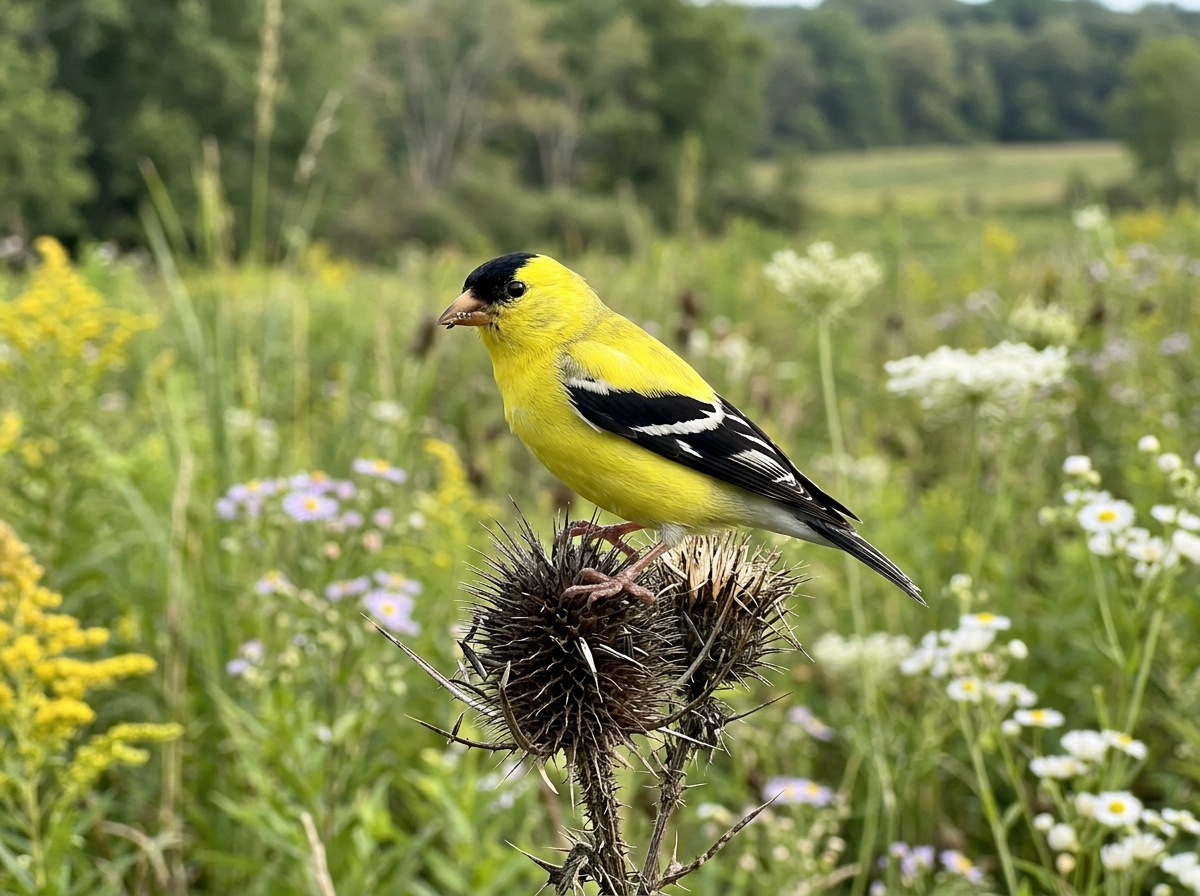
New Jersey's official state bird is the Eastern Goldfinch. That's the name used in the state's legal code, specifically N.J. Stat. Title 52, § 52:9A-1, which reads simply: 'The eastern goldfinch is hereby designated as the New Jersey state bird.' If you've seen it listed as the American Goldfinch in a field guide, don't worry, it's the same bird. Modern ornithology typically uses American Goldfinch (Spinus tristis) as the standard species name, but New Jersey's official designation sticks with the older common name, Eastern Goldfinch.
What Is New Jersey’s State Bird? Identification and History

Marcus Webb
23 Mar 2026
New Jersey's Official State Bird
The Eastern Goldfinch has been New Jersey's state bird since 1935. You can verify its status in two reliable places: the State of New Jersey's official Symbols page (state.nj.us), which lists 'State Bird, The Eastern Goldfinch,' and the codified statute cited above. If you ever come across a secondary source that contradicts this or lists a different bird, the statute is your high-authority confirmation.
How to Spot One in the Field
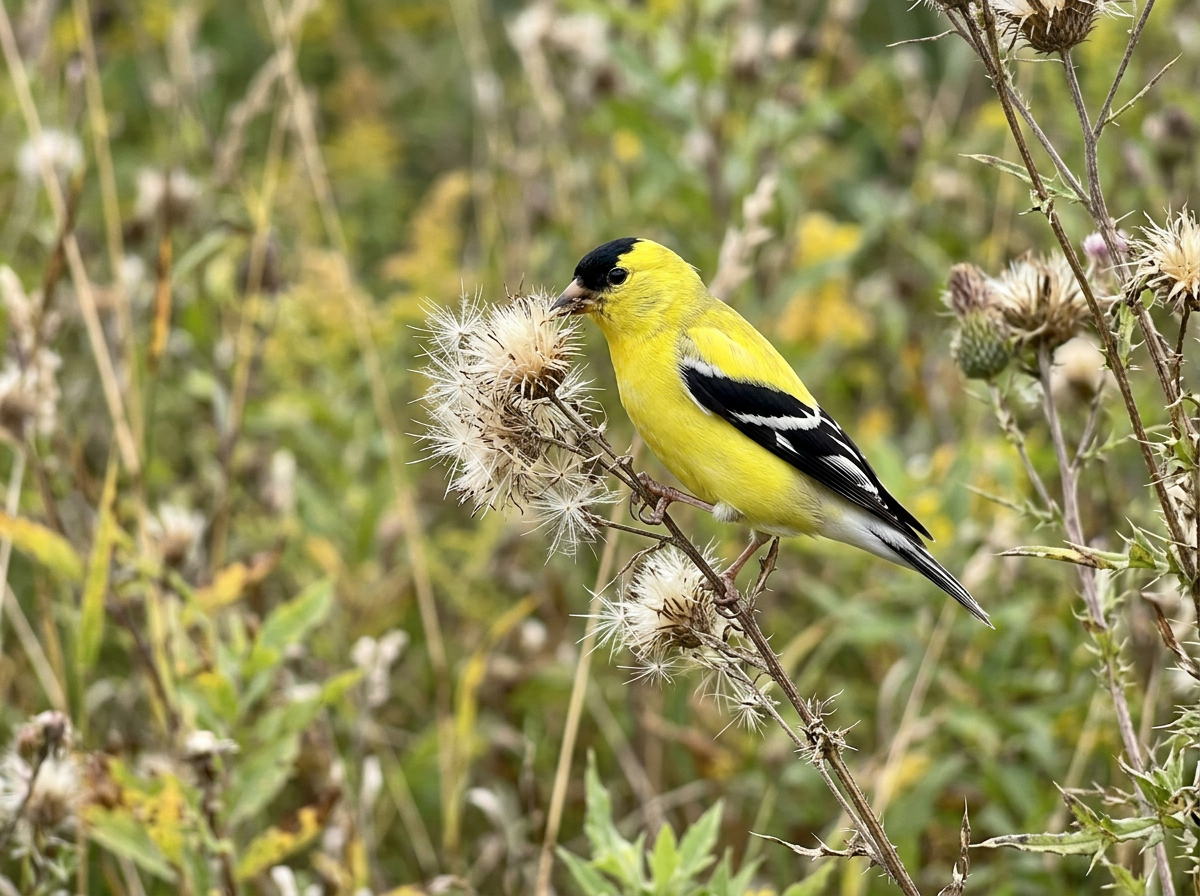
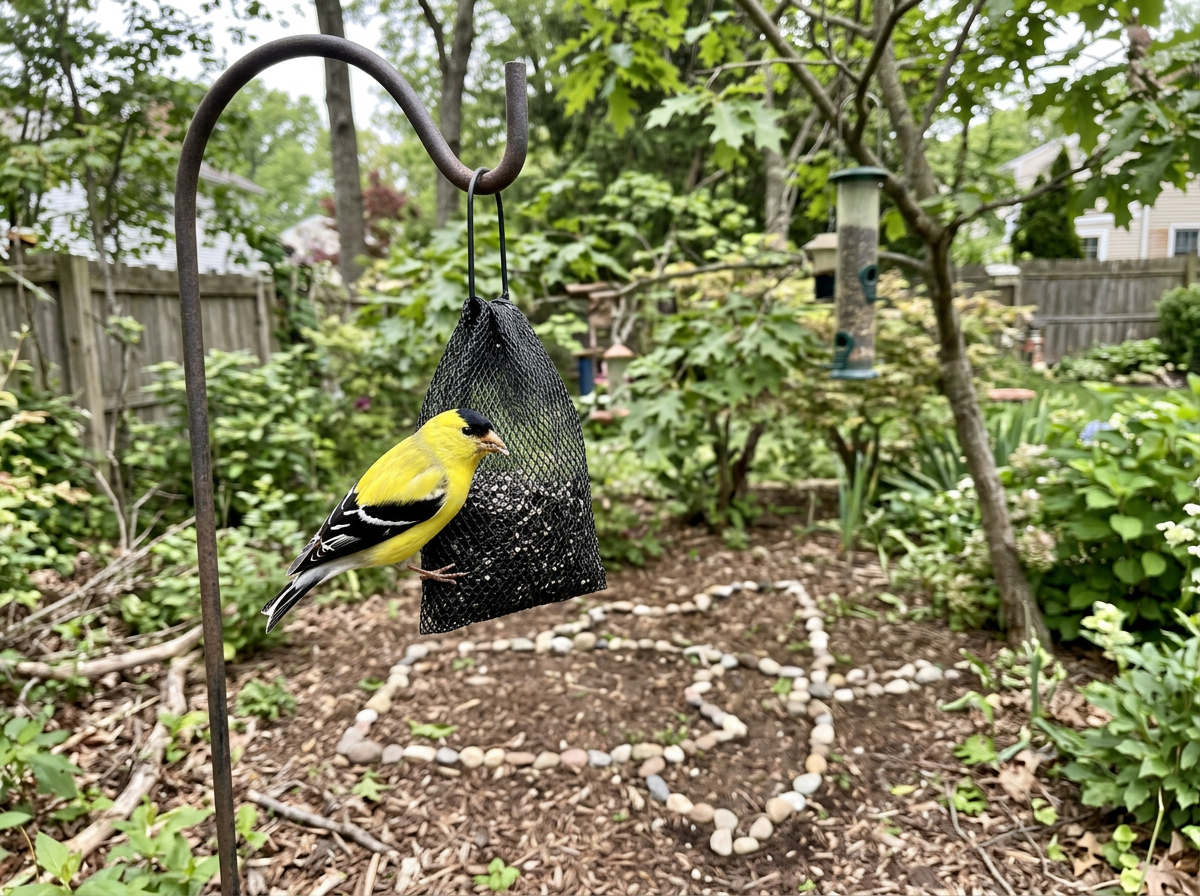
The male Eastern Goldfinch in breeding plumage is one of the most unmistakable birds in North America. Its body is a vivid, almost electric yellow, and it has a black cap on the top of its head along with black wings. New Jersey's own official symbols page describes the bird using exactly these traits: bright yellow feathers, black head, and black wings. The female is a more muted olive-yellow without the black cap, which is typical for songbirds where the female is less conspicuous.
In winter, both sexes tone down considerably. The bright yellow fades to a yellowish-brown or even grayish color, so the bird looks quite different from its summer self. The feature to lock onto in winter is the bold white or buff wing bars on those black wings, along with white tail spots. That combination will separate it from look-alikes even on a gray January day in New Jersey.
Flight pattern and call are two more reliable identifiers. The goldfinch flies in a bounding, roller-coaster pattern, rising and dipping repeatedly. As it flies, it gives a distinctive contact call that birders describe as sounding like 'po-ta-to-chip' (Cornell Lab's description) or 'perchickory' (Audubon's take). Once you've heard it a few times, it's one of those calls you never forget. For habitat, look in weedy fields, open woodland edges, and roadsides, the goldfinch is a seed-eater and gravitates toward areas with thistle, sunflower, and other seed-heavy plants.
Quick ID at a Glance
- Breeding male: vivid yellow body, black cap, black wings with white wing bars
- Female: muted olive-yellow, no black cap, same black-and-white wing pattern
- Winter birds: yellowish-brown to gray, but bold wing bars remain visible
- Flight: bounding, undulating up-and-down pattern
- Call in flight: 'po-ta-to-chip' cadence, given repeatedly
- Habitat: weedy fields, open woodland, roadsides with seed-producing plants
Why New Jersey Chose the Goldfinch
The goldfinch wasn't chosen at random. By the time the legislation moved forward in 1935, the Eastern Goldfinch was already closely associated with the New Jersey Audubon Society, which had used the bird as a symbol before any official government designation existed. That pre-existing cultural connection gave the goldfinch a head start when the question of a state bird came up.
The bird is also genuinely common throughout New Jersey year-round, which matters when you're picking a symbol that represents the whole state. It isn't a rare or regional species that only some residents would encounter. Any New Jersey resident with a backyard feeder or a local park nearby has a reasonable shot at seeing one. That accessibility made it a natural fit as a symbol meant to resonate broadly across the state's population.
The History Behind the Designation

The formal push to give New Jersey an official state bird came through Senate Bill No. 241, sponsored by Senator Kuser. The bill was introduced on January 29, 1935, and referred to the Committee on Miscellaneous Business. Its language was direct: the act proposed 'to create a New Jersey State Bird,' naming the Eastern Goldfinch specifically. The legislation was enacted that same year as Chapter 283 of the Laws of 1935, and it has remained on the books unchanged ever since, codified as N.J. Stat. § 52:9A-1.
The 1930s were a period when many states were formalizing their official symbols, often driven by civic organizations, schools, and conservation groups that saw state symbols as tools for public education and state pride. New Jersey's adoption of the goldfinch fits squarely into that national trend, with the New Jersey Audubon Society's prior connection to the bird giving the selection a ready-made civic endorsement.
Key Dates
| Event | Date / Detail |
|---|---|
| Senate Bill No. 241 introduced | January 29, 1935 |
| Bill referred to committee | Committee on Miscellaneous Business |
| Legislation enacted | Chapter 283, Laws of 1935 |
| Codified statute | N.J. Stat. Title 52, § 52:9A-1 |
| Status today | Eastern Goldfinch remains the official NJ state bird |
How New Jersey Compares to Other States
New Jersey is not alone in picking the goldfinch. Iowa also designated the Eastern Goldfinch as its state bird, making it one of the species shared by multiple states, a pattern you'll notice if you spend time browsing state bird designations across the country. Washington State's official bird is the Willow Goldfinch, which is part of the same American Goldfinch species complex, just given a different regional common name. So depending on how you count, the goldfinch in its various named forms shows up as a state symbol in at least three states.
and Delaware's is the Delaware Blue Hen (a domestic chicken variety, not a wild species). what is the pennsylvania state bird
States That Share the Goldfinch
| State | Official State Bird Name | Species |
|---|---|---|
| New Jersey | Eastern Goldfinch | Spinus tristis |
| Iowa | Eastern Goldfinch | Spinus tristis |
| Washington | Willow Goldfinch | Spinus tristis (same species) |
Where to Go from Here
If you're just here for the quick answer, you've got it: New Jersey's state bird is the Eastern Goldfinch, official since 1935 under N.J. Stat. § 52:9A-1. If you want to see one, visit a weedy field or put a nyjer (thistle) seed feeder in your backyard, goldfinches are reliably attracted to it and will show up in good numbers from late summer through winter. For birders wanting to go deeper, comparing how NJ's goldfinch stacks up against the state birds of neighboring states like New York, Pennsylvania, or Delaware is a fun exercise that shows just how differently states approached their official bird selections.
FAQ
What bird do I look for if a field guide says “American Goldfinch” but the article says “Eastern Goldfinch”?
It is the Eastern Goldfinch (official designation), which many bird guides list under the same species as the American Goldfinch (Spinus tristis). If you want to match official language, use “eastern goldfinch,” but field identification can be based on the American Goldfinch species name.
How can I identify the Eastern Goldfinch in winter when it no longer looks bright yellow?
Yes, winter identification can be confusing because the yellow fades and the bird looks more grayish overall. Focus on the still-noticeable black wings with bold white or buff wing bars, plus the white or buff tail spots, and expect the contact call to be a key giveaway.
What feeder or habitat setup makes it easiest to see New Jersey’s state bird?
The “seed-eater” clue matters for where you’ll spot it. For the best odds, try feeding nyjer (thistle) seed, and place the feeder near cover so it feels safe. You’re most likely to see it from late summer through winter, when seed sources and feeder visits increase.
How do I tell the Eastern Goldfinch from similar-looking finches if I mostly see females?
The male is typically the easiest to confirm because of the bright yellow and the black cap during breeding plumage. The female is more muted, so if you only spot an olive-yellow bird without the black cap, rely on wing bars and tail spotting, and listen for the contact call.
If I cannot hear the call, what visual features should I use to confirm it’s the state bird?
The contact call can help, but you may not hear it every time you see the bird. If you miss the sound, use the combination of features instead (wing bars, tail spots, and the characteristic bounding flight pattern) before concluding it is the state bird.
What are common identification mistakes people make when trying to spot the Eastern Goldfinch at backyard feeders?
Don’t rely on color alone, especially in winter or if lighting is poor. Another common mistake is confusing it with other small finches that also frequent feeders, so check for the goldfinch’s black wings with distinct wing bars and the pattern of flight movements (repeated rises and dips).
If I find a website claiming a different New Jersey state bird, what should I trust?
New Jersey’s state-bird status is not time-limited, but the official name in state law is what controls. If you see a conflicting bird in a non-official list, treat the statute as the deciding source rather than the secondary list.
Next Article
What Is New York State Bird? Official Answer and Facts
Learn the official New York state bird, clear up NYC confusion, and get quick facts to recognize it fast.